Did Intel read my blog? Interesting posts about Intel here and here and here.

Of the Android tablets, the Xoom was the first to look reasonable but the iPad 2 made it look dated. The first real iPad 2 challenger appears to be the Samsung Galaxy Tab 10.1. Don’t confuse this with the thicker 10.1v. Engadget has a good review here. They also have a review of the HTC Flyer posted here. While not as positive as the Galaxy Tab review, I think the integration of audio and notes on the Flyer has a lot of promise.

Does anyone else think Microsoft buying Nokia’s smartphone business is a bad idea? That would make Microsoft like Apple but still trying to be like Google. Pick an approach! If Microsoft tries to straddle the fence then they will fail. Why should HTC or anyone else make a Windows Mobile phone if their direct competition on the Windows Mobile space will be Microsoft. Microsoft could wind up being the sole manufacturer of Windows Mobile phones. At that point I give a big advantage to Apple.

I haven’t talked much about Chrome and the Chromebook. A good article on them is here.

If you are following what I am saying about transparency and convergence I suggest you read  Sarah Rotman Epps’ Blog.

In looking back at my comments on transparency I realize I might be giving the wrong impression. Data transparency is moving along. However, creating software that makes moving from one device to another transparent is very hard to accomplish. It involves making the transition from one UI to another transparent or, coming from the other direction, involves making one UI work across several devices. Consider where this has been most successfully done i.e. the iPad and iPhone. Both the iPhone and the iPad use the same OS with the same UI. However, in accomplishing this, the tablet version of iOS has been hindered by the need to work well on the much smaller screen of the iPhone. Google has taken a different approach. Their tablet version of Android is noticeably different from the phone version. The result is that Apple and Google are coming at the problem from opposite directions. With Ice Cream Sandwich, Google will try to unify the tablet and phone experience and thereby improve transparency when moving between the devices. Apple, with iOS 5, will try to bring better functionality to iOS so their tablet offering is less restricted by the OS and is able to come closer to the functionality of a full blown laptop.

But tablets and phones are closely related. Any problems encountered while working to achieve transparency between the two pale compared to merging the experience with other devices. Consider the TV set. It lacks a touch screen. Any keyboard linked to the TV set will almost certainly be less than full sized. It would be easy to claim that the TV is fundamentally different and to forget transparency altogether.  That would be a mistake. There is too much money at stake to take the easy way out. Here is where human factors specialists will have to shine. They will have to craft a different OS interface than that on a phone or tablet but one which feels very similar to the phone OS interface such that knowing the phone OS takes the TV OS learning curve to zero.The same will be true when looking at the man-machine interface in the automobile. Here, minimizing driver distraction will be the main goal. There are two aspects to driver distraction and they will sometimes work against each other. On the one hand, making the automobile UI look like the phone UI will allow use to be more second nature and thereby require less conscious thought on the part of the driver. The problem is that a phone OS will sometimes require that the driver look away from the road. That’s not good. A compromise will have to be reached. Like the TV, there will be other ways of interfacing to the UI than just a touch screen. There will be voice, steering wheel controls and probably a mouse like device similar to what BMW uses on its infamous iDrive.

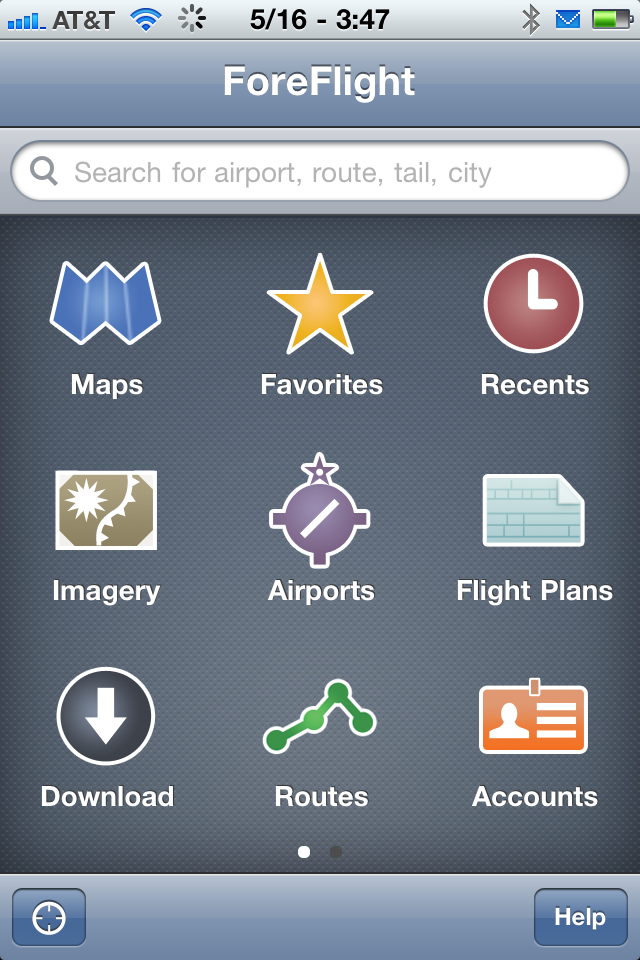
This high difficulty level extends to applications. I really like those iTunes store apps that have the plus sign next to the price. You pay once and you get something that works on both your iPhone and iPad. I hate paying twice for an app just because I want it on my iPhone and my iPad. Down the road I want to buy an app once and use it on whatever device is handy. This trend is already in full play. Just take a look at Steam. When you buy a program through Steam, you can download and install it on any machine you like. You log into your Steam account to gain access. The main problem here is that you have to download a large program for each device but that could be easily automated. Also, as more programs exist in the cloud, this will be less of an issue. Already some programs allow the user to start playing while sections of code not in use continue to download. The big problem is interface design. Imagine making Crysis work on everything from a phone to a TV set. That’s not easy. It is particularly difficult if the user wants to pick up a game in progress on one device, say a TV, where he left off on another such as his phone. To get an idea of the scope of the problem look at Foreflight. This is a great aviation app with an excellent user interface. However, their iPhone and iPad apps are two completely different animals. With Foreflight this isn’t too big of an issue since the apps are free and the database subscription allows use on an iPhone and an iPad at the same time. The photos below show how different the interface has to be because of screen size.

The iPad version of Foreflight allows selecting different pages from any current page. Look at the bottom of the picture below.

Sections like AIRPORTS and DOWNLOADS can be selected on the bottom. Now look at these screen captures from the iPhone app. The first shows the page equivalent to the iPad page shown above.

Here you select CLOSE which takes you to this page:
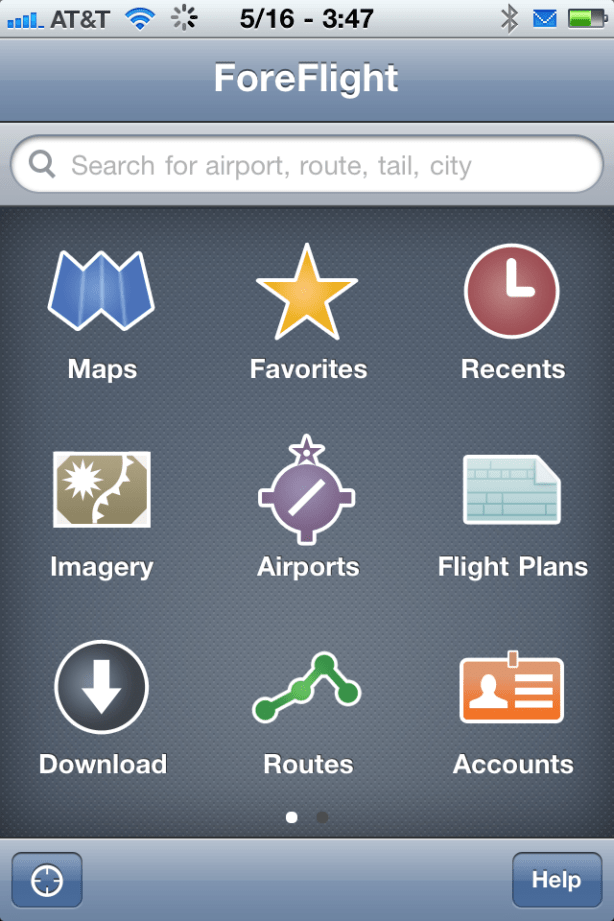
Now you can select the page you want.

I am not picking on Foreflight. Rather, I am highlighting what they have done as an example of adapting to the different screen sizes of the two devices while maintaining a lot of the same feel so that the learning curve is low. However, this is the easy part. Adapting to TV, car, laptop etc. will be a lot more difficult. If you are a pilot you might be wondering why anyone would want to use this program across so many devices. But, if transparent use and data is really achieved then imagine the following scenario. You are watching TV with some friends when the talk turns to playing golf on Hilton Head the next day. You bring up Foreflight on the TV and flight plan the trip to find out the flight time and take an initial look at weather. The next morning you quickly update and file the flight plan using your laptop. On the way to the airport you notice that the morning clouds haven’t burned off as expected so you decide to check the current airport weather. Your car interfaces into the Foreflight app on your phone and you are able to bring up the weather. In the air passengers follow the flight’s progress on the iPad using the same program. You have bought one application and used it across numerous devices. It feels easy and natural to do but it was only easy for you. For the developers it was a tough task. They had to sweat the user interface and how it would appear on different devices. The device manufacturers had to sweat the user interface of the OS to make sure this transparent usage would , well…, really be transparent.

If you have been following along with my comments on transparency you might think the only big prize is owning the phone market or the tablet market or both. There’s another prize that’s very big. To understand it you need to take a look at PayPal. When I am online I like it when PayPal is a payment option. I don’t have to pull out my credit card. I just have to remember my PayPal login and I can complete my desired purchase. What if every transaction in the US went through two or three companies? This would be like a super PayPal. It wouldn’t just be online transactions but local purchases such as groceries, gas, clothes and dining.

It’s time for some simple math fun. April 2011 retail sales in the US were approximately $390B. One percent of that is $3.9B. If a company could get a third of this it would be $1.3B. That’s per month or $3.9B per quarter. This is only for the US. How do you get 1% of every transaction? You make them flow through your device. With NFC, the phone is the gateway to your credit card. When watching TV,  think GoogleTV or Apple TV. What if all you needed was one account with Google or Apple and you could cover all of your bills using your phone or your TV? This makes iTunes look puny. Don’t kid yourself, both Google and Apple are eyeing this. I suspect Microsoft is too but they are a bit late.

Amazon, a company I haven’t mentioned till now, sees this  too. Their solution has been to be the central online shopping site. However, remember how the Germans went around the Maginot Line? Remember how I said Apple and Google were doing a similar end around on the Wintel alliance? We could have another end around play here. Imagine your phone being your main device for purchases i.e. replacing your credit card. Apple and Google could move in on Visa and Mastercard. Now that they have you funneling your purchases through them it’s a small step to begin guiding those purchases. Think Apple App Store on a huge scale. Think of the Google Market Place but selling more than apps. Both of these companies are sitting on large amounts of cash and looking for ways to turn that into even larger revenue and profits. What can Amazon do? They can take a clue from their Kindle line. I don’t own a Kindle. However, there are Kindle apps on my laptop, my desktop, my phone and my tablet. When I buy ebooks my first choice is through Amazon. I don’t buy through iBooks because iBooks isn’t as broadly cross platform as Kindle. It’s that old transparency of data thing again. By buying through Kindle (Amazon) I can read the book on all of my devices. I read them where I want, when I want, and on the device I want to use.  Amazon needs to be the one company that will allow both your Apple device and your Android device to use the same account. At all cost they need to make sure the various platforms are open enough to allow them to be the central clearinghouse for your purchases. The same can be said for Mastercard and Visa. Those two companies dominate the landscape right now. However, fundamental changes are afoot and that always spells opportunity for others. For the first time Visa and Mastercard are vulnerable.

When will this take place? No time in the near future as far as the general public will see. However, the initial steps are being taken now. At first you will just place your credit card information in your phone and use it instead of the physical card. This is only slightly different from having Amazon store your credit card information with your account. From there it’s a small step to add extras to the Apple and Google app stores. Finally, Apple or Google issue you the credit line and push Visa and Mastercard out. They will be able to do this by offering incentives from the savings generated by not shipping Mastercard or Visa 2%.

Fragmentation in Your Face

Posted: May 12, 2011 in Apple, Google
Tags: , , ,

I thought I was done posting for today. Then I saw something in the Android Marketplace. I don’t own an Android phone so I don’t go roaming around market.android.com very often. I do however, think Netflix is a very influential company and that media streaming is where TV is headed. So, rummaging around I found this:

Get Netflix on your Android phone. Just download this free app and you can instantly watch TV shows & movies streaming from Netflix.

• It’s part of your Netflix unlimited membership. Not a Netflix member? Start your FREE trial today.
• Watch as often as you want.
• Resume watching where you left off on your TV or computer.
• Browse movies and manage your instant Queue right from your phone.

Currently Netflix playback is supported on the following phones:

• HTC Incredible with Android 2.2
• HTC Nexus One with Android 2.2, 2.3
• HTC Evo 4G with Android 2.2
• HTC G2 with Android 2.2 
• Samsung Nexus S with Android 2.3

You can click the link if you must but the key info is above. What struck me was the limited number of devices. Now I use an iPhone. There are certainly apps that won’t work with older iPhones but most do. Besides Apple users are expected to upgrade every two to four years anyway <BG>. What strikes me about the above listing is how many recently introduced Android phones aren’t listed. Shouldn’t any Android phone introduced in the last two years automatically be on this list? This is a big issue for Android. The Android brand needs to mean something. It’s OK to say any phone with Android 2.2 or later. The key should be the ANY PHONE part. If you can run a certain version of the OS then you should be able to run the app if your phone is a relatively new one. Now I suspect that may really be the case but the fact that it isn’t stated that way on the app store is a problem. Maybe it could say Android 2.2. and 1.0GHZ processor or faster and 512MB RAM. That’s a bit of a pain but it is generic. That’s what happens in PC land. What if every PC program had to have a model list that you checked to see if it would run on your machine? Crazy right? Fragmentation is a real issue for Google and the Android brand.


I’m going to go out on a limb and make some suggestions to Apple. As their recent meager earnings and growth show, they really need my advice.

Apple TV needs to be transformed. Start by allowing apps to run on it. The goal should be to make it a casual gaming platform. Card games would work especially well. The TV would show the overall table. Each player would view his hand on an iPhone, iPod Touch, or iPad. A simple controller could be developed and sold for people without the above devices. The key is that this would integrate the Apple community of devices. iOS devices have already reached a portable gaming market share that challenges Nintendo DS.  It’s time for Apple TV to attack the Wii.

As the trends of transparency and convergence move forward it is going to be more and more important that moving from device to device is seamless. iOS on Apple TV needs to be the same overall as iOS on the iPad etc.

I said Apple TV needs to be transformed. That includes the hardware form factor. The present product is fine as an add-on device. However, GoogleTV is a big threat and the largest threat will be from TV manufacturers integrating GoogleTV into their TV sets. That will remove a lot of the value of getting an Apple TV device. This presents a dilemma. How does Apple retain total control of Apple TV, including the hardware, while attacking GoogleTV. The answer is to build a version of Apple TV in a slim card format that can be installed in a standardized slot on a TV. The manufacturer will get to advertise “Apple TV inside.” Apple will get to control the hardware and software. Furthermore, while TV sets have long replacement cycles, Apple will still be able to tempt consumers to update their Apple TV card every two to four years at a $99 cost. As GoogleTV gets built inside of TV’s this will be an issue for Google. We already see that the original Android phones can’t run the newest releases of Android.

When OSX and iOS merge, Apple will have a single solution across desktop, laptop, tablet, phone, and TV. Furthermore, most of their solution will fit the model of upgrading every two to four years. That not only generates increased revenue but it allows the software to move forward without being hampered by legacy device issues. Microsoft has been hindered by the need to have Windows run on old hardware. This has been less of an issue for Apple. Apple should work to maintain that advantage.

Eventually the content on your phone will link to your TV. Video calls will transfer seamlessly from device to device. The winning companies will be the ones that generate an integrated and transparent ecosystem of devices. Apple has a tremendous opportunity here. The iPhone and iPad are seamless to move between. OSX, with the introduction of Lion, will look more like iOS. That leaves the TV. Apple can certainly position the iMac as a TV. However, that market will be small compared to the TV market as a whole. They will be in danger of being overwhelmed by GoogleTV. Today companies like Panasonic offer their own, proprietary internet connectivity solutions. In the future they will look to go with a mainstream third party solution. Apple needs to make sure they are a big portion of the solution.

Apple TV has been almost a hobby device for Apple. That is changing. It’s time for Apple to see how important it is to make Apple TV become the standard for TV connection to the internet. Eventually it become a streaming media world. As convergence progresses the DVD player will disappear as will the set top box. The game console will disappear too. There will just be the TV. Apple needs to make sure they are in that TV.

Nit Picks for Apple

Posted: May 12, 2011 in Apple
Tags: , ,

Here are some small things I would like to see Apple change.

  1. Make printing in OSX consistent across apps. I can print to a PDF in Preview but not from iPhoto and not if I select a file in Finder and then select Print.
  2. Make printing return addresses easier. You can easily print contacts to address labels but you can’t fill a sheet of address labels with one contact. This makes printing a bunch of return address labels very frustrating.
  3. Allow placing the menu bar on individual windows like in Windows. Being in a window on the lower right of a 30” monitor makes it a pain to go all the way to the upper left of the monitor to get to File Print.
  4. Make it so iTunes uses the Pictures, Music and Movies directories and create a new standard directory named Books. Use these. If possible make iPhoto use them too.
  5. Add automatic backup to iWorks applications.
  6. Allow access to a directory structure in iOS. At the least generate a Documents directory and allow access to it and the creation of subdirectories. I should be able to save a PDF and open it with multiple programs. Similarly, when a web site wants me to upload a fie I should be able to place the file in Documents and then select it for upload using the website’s interface.

Near field communications, NFC, is about to be a big deal. NFC is a very short range radio link which can read passive tags such as RFID tags on items. Two active devices can share data similar to syncing devices. An example might be transferring contact information or sharing a document. Rather than repeat a lot I’ll let you read the Wikipedia entry here. Other interesting applications include letting your phone be the key for your car or allowing your phone to use stored credit card information to check out at the supermarket. NFC is key to the phone becoming the central convergence device. As I keep saying, convergence is big; very, very big. It will take longer (think many years) but the phone will become your house keys too. The idea is to eliminate all of those separate items you load into your pocket and wallet. I am not claiming that everything will be eliminated but it will be thinned down. This is powerful stuff and I expect to see the phone s credit card becoming mainstream soon. There has been speculation that iPhone 5 will support NFC. If it doesn’t then iPhone 6 definitely will. Ice Cream Sandwich, the upcoming unification version of Android, hs NFC support including something Google calls 0-click. This shows that Google is actively working on transparent usage models. The potential, and the danger are large. Security will be an issue with the usage model having to make sure that things that you don’t want to happen don’t happen inadvertently. For instance, you might not want someone to have your phone number. Still, the attraction will be overwhelming. Take a look at this “How to NFC” presentation from Google I/O 2011. It’s a long video so, if you aren’t a developer,  jump to the 6 minute mark but be sure to watch through the 17 minute mark.

This is transparency coming to your life and it’s just a start. What Google is showing is the basic enabling interface technology along with a few demo applications. Developers will take this and run with it.

The financial impetus for this is huge. Think PayPal. What if every credit card transaction went through the iTunes store or through Google with Apple or Google taking a very minor piece of the financial action? The numbers are staggering. With huge dollars at play expect a long term battle to be your NFC transaction supplier.

One reason Windows won over the Mac was broad hardware support. Anyone looking at the variety of Android phones and tablets will see the same thing being done by Google. There is another area that Microsoft attacked as well and that is peripheral support. At Google I/O 2011, Google announced support for Arduino based peripherals. If you aren’t familiar with Arduino, it is a flexible, if simple, platform that is easy to work with and very popular in the hobbyist community. This should allow for quick and easy development of a lot of Android peripherals. Check out the Android Open Accessory Development Kit by clicking here.

As reported by VR-Zone, it looks like Intel’s upcoming Cedarview Atom platform will sport PowerVR graphics from Imagination Technologies. This is a big deal. PowerVR is also used in Apple’s chips that power the iPhone and iPad. PowerVR is set to be the standard for graphics across a broad range of hardware. This will make it difficult for other technologies to enter the space as PowerVR becomes the industry standard. The loser here is Intel. For Cedarview, they are passing over their own graphics technology in favor of PowerVR. That means paying royalties to Imagination Technologies. One of those cracks in Intel’s armor just got a little bigger.

The main trends I keep coming back to are convergence and transparency. Google is holding Google I/O 2011 and these trends are front and center. There is a lot to cover. To start, let’s talk about Ice Cream Sandwich. No, not the dessert but the update to Android. As I mentioned after looking at the Xoom, a problem with Android tablets is that they are more than a little divorced from the Android phone experience. Ice Cream Sandwich solves that by bringing a lot of the tablet features to the phone. This gets Google back on track and makes them a serious threat to Apple. Goole seems to finally recognize that, while variety may be the spice of life, variety, in the form of platform fragmentation, is also the enemy of convergence and transparency. Fragmentation of the Android platform is a big problem but Ice Cream Sandwich is a big step toward reducing fragmentation. That means a common user experience between an Android phone and an Android tablet. This is a hallmark of Apple’s iOS. Absent from all of this is Microsoft.