Archive for the ‘Transparency’ Category

Lately I’ve watch a number of interviews with Ford CEO Alan Mulally. I find a lot to like in this guy. He puts forth a good image for Ford. Moreover there seems to be substance to back up the talk. When you look at Ford you see a company on the upswing. Quality has improved to where it competes with the best out there. Furthermore I sense a spirit in the company which wants to lead rather than follow.  I don’t always agree with what’s being done but I admire the attempt. A good example is the use of Microsoft’s Sync product. It’s flawed. I have concerns because it is from Microsoft. Then again I would have concerns if it was from Apple.  It does NOT do what I think it should. Mulally seems to understand this. Here is a good interview that speaks to convergence and transparency.

Pay particular attention to the 7:40 and 10:10 time points. Mulally mentions making the digital life in the home merge with the digital life in the car. I like this guy. He accepts criticism of Sync but stands by it as the right direction even if presently flawed. I like a guy willing to believe in a direction and work to perfect it even if the initial attempt isn’t what it should be.

I mentioned that Mango showed that Microsoft could come on strong once they recognized they were behind. I saw a few unexpected features in Mango and it gave me hope that Microsoft was still in the game if very far behind. However, with the release of more information about Windows 8, I am truly surprised. Microsoft really gets it. They see the need for a unified OS across platforms and for a transparent user experience. Furthermore, Microsoft is using its strength on the desktop to leverage itself into the tablet and phone space. This isn’t my pick for the easiest path in general but it is the easiest and best way for Microsoft. More than other releases, Windows 8 will be about an aggressive business strategy. I love it when business, the consumer, and engineering mesh at such an intimate level.

Windows 8 is important on several levels. First, let’s start with the fact that it will not only run on X86 CPU’s but on ARM. Wow! Let that sink in. This means Windows on a CPU that isn’t compatible with the Intel X86 architecture. There will be no emulation layer so current X86 apps won’t run on ARM based hardware. However, this is important in and of itself. Microsoft will be encouraging developers writing lighter apps to write in Java and HTML5 so the apps will be independent of the CPU used. Add this to Apple toying with the idea of an ARM based MacBook Air and you know why Intel is nervous.

The next surprise is the breadth of Windows 8. It is really a tablet  OS where the mouse and keyboard can substitute for touch. You read that correctly. The OS is, in many ways, a tablet OS first and a desktop OS second. This doesn’t mean a compromised desktop OS. What it does mean is an OS with touch infused throughout.  The same OS will run on tablets, laptops and desktops.

They say a picture is worth a thousand words and the next surprise is best illustrated with a couple of pictures. Here is one of Windows 8 on a PC:

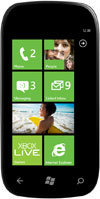
Next I have a picture of the home screen from a phone running Windows Phone.

Do you see what I am excited about? Just like Apple, Microsoft is making the desktop OS look and feel like the phone OS. Do you believe me now when I talk about the push for transparency of the computing experience? Now go back to the comment above about Microsoft pushing for apps written in HTML5 and Java. Those will be easy to port to Windows Phone and vice versa. Microsoft may be late but they are coming on strong.

What does this mean on the business side? Obviously the push onto ARM is a threat to Intel and AMD. In terms of the other hardware and software players here is how I see it. RIM is in an increasingly bad position. They have zero desktop presence and Microsoft is stronger in the corporate world than RIM. Windows 8 might seem independent of RIM’s Blackberry world but, in actuality, it has the potential to do great damage. HP may take a hit too. They are betting a lot on WebOS. I don’t see what the value add is for WebOS. Call this one more wait and see but be skeptical. HP could quickly shift to being Windows 8 centric if need be. Heck, they are Windows centric today.  Apple probably fairs OK in the near term. Longer term they might lose some of their momentum. However, I see Apple as the best positioned against Windows 8 if they can continue to move towards merging iOS and OSX. I’m still very strong on Apple. Next up for Apple is iOS 5 and iCloud which will be announced next week. Windows 8 could be problematic for Google. I have trouble believing in Chrome as a desktop OS. Google will still be ahead in the TV space but compared to Microsoft and Apple they lack the desktop. Android is the largest selling smartphone OS and we are about to be inundated with Android tablets including some excellent ones such as the Samsung 10.1. I still see Microsoft being behind Google but it is a lot more interesting than it was a day ago. Apple just made iWork available on the iPhone in addition to the iPad and OSX devices. Microsoft will have Office running across all devices. Will people buy into Google’s idea that web based solutions are the best answer for their productivity apps? People may but only if Microsoft screws things up. Then again, Microsoft mucked things up in the past with poorly conceived products like Works.

It may seem like I have been mostly regurgitating news. Look deeper. I am trying to point out the trends of convergence and transparency and how they are reaching everywhere. On the surface Google Wallet is a nice tweak to how you pay for what you buy. In terms of those affected it is easy to see the retailers, banks and credit card companies. If you look on the surface at semiconductor companies you might just think about those chips which enable NFC. This is part of something much bigger that affects many more companies. NFC services like Google Wallet will make transactions more transparent i.e. easier and more convenient. They also converge services into the phone and continue pushing the phone towards becoming your dominant computing platform. This is what I started this blog off with. It doesn’t matter if Google Wallet in it’s present form becomes big or not. It’s a symptom of a larger movement. No matter what business you are in you need to evaluate your strategy with convergence and transparency in mind. How will your business play out when the phone is the dominant computing platform? Intel and AMD are reacting to this today. For once the interests of AMD and Intel are aligned. They need to bring the X86 architecture to tablets and then mobile phones. Microsoft is also reacting as they worry about Windows being marginalized. Think how differently this would have been had the iPhone and iPad been based on the Atom processor. For the other chip companies there is the increasing importance of LTE and the cloud. Flash memory will continue to be pushed to grow in density and decrease in price. The world is moving towards one gigabyte of storage in the phone. Remember reading about how over built the global network is? Think again. OLED screens will finally become a mainstream technology driven by the phone. Eventually they will grow to be the dominant technology in both laptops and TV’s.  This shift affects media. The RIAA and  MPAA continue their vain attempts at protecting intellectual property rather than embracing the technology trends and profiting from them. That’s an entire blog (or two or three) in and of itself. Is your company preparing for the upcoming changes? More importantly, have you looked deep to see how convergence and transparency will change your business landscape?

Did Intel read my blog? Interesting posts about Intel here and here and here.

Of the Android tablets, the Xoom was the first to look reasonable but the iPad 2 made it look dated. The first real iPad 2 challenger appears to be the Samsung Galaxy Tab 10.1. Don’t confuse this with the thicker 10.1v. Engadget has a good review here. They also have a review of the HTC Flyer posted here. While not as positive as the Galaxy Tab review, I think the integration of audio and notes on the Flyer has a lot of promise.

Does anyone else think Microsoft buying Nokia’s smartphone business is a bad idea? That would make Microsoft like Apple but still trying to be like Google. Pick an approach! If Microsoft tries to straddle the fence then they will fail. Why should HTC or anyone else make a Windows Mobile phone if their direct competition on the Windows Mobile space will be Microsoft. Microsoft could wind up being the sole manufacturer of Windows Mobile phones. At that point I give a big advantage to Apple.

I haven’t talked much about Chrome and the Chromebook. A good article on them is here.

If you are following what I am saying about transparency and convergence I suggest you read  Sarah Rotman Epps’ Blog.

In looking back at my comments on transparency I realize I might be giving the wrong impression. Data transparency is moving along. However, creating software that makes moving from one device to another transparent is very hard to accomplish. It involves making the transition from one UI to another transparent or, coming from the other direction, involves making one UI work across several devices. Consider where this has been most successfully done i.e. the iPad and iPhone. Both the iPhone and the iPad use the same OS with the same UI. However, in accomplishing this, the tablet version of iOS has been hindered by the need to work well on the much smaller screen of the iPhone. Google has taken a different approach. Their tablet version of Android is noticeably different from the phone version. The result is that Apple and Google are coming at the problem from opposite directions. With Ice Cream Sandwich, Google will try to unify the tablet and phone experience and thereby improve transparency when moving between the devices. Apple, with iOS 5, will try to bring better functionality to iOS so their tablet offering is less restricted by the OS and is able to come closer to the functionality of a full blown laptop.

But tablets and phones are closely related. Any problems encountered while working to achieve transparency between the two pale compared to merging the experience with other devices. Consider the TV set. It lacks a touch screen. Any keyboard linked to the TV set will almost certainly be less than full sized. It would be easy to claim that the TV is fundamentally different and to forget transparency altogether.  That would be a mistake. There is too much money at stake to take the easy way out. Here is where human factors specialists will have to shine. They will have to craft a different OS interface than that on a phone or tablet but one which feels very similar to the phone OS interface such that knowing the phone OS takes the TV OS learning curve to zero.The same will be true when looking at the man-machine interface in the automobile. Here, minimizing driver distraction will be the main goal. There are two aspects to driver distraction and they will sometimes work against each other. On the one hand, making the automobile UI look like the phone UI will allow use to be more second nature and thereby require less conscious thought on the part of the driver. The problem is that a phone OS will sometimes require that the driver look away from the road. That’s not good. A compromise will have to be reached. Like the TV, there will be other ways of interfacing to the UI than just a touch screen. There will be voice, steering wheel controls and probably a mouse like device similar to what BMW uses on its infamous iDrive.

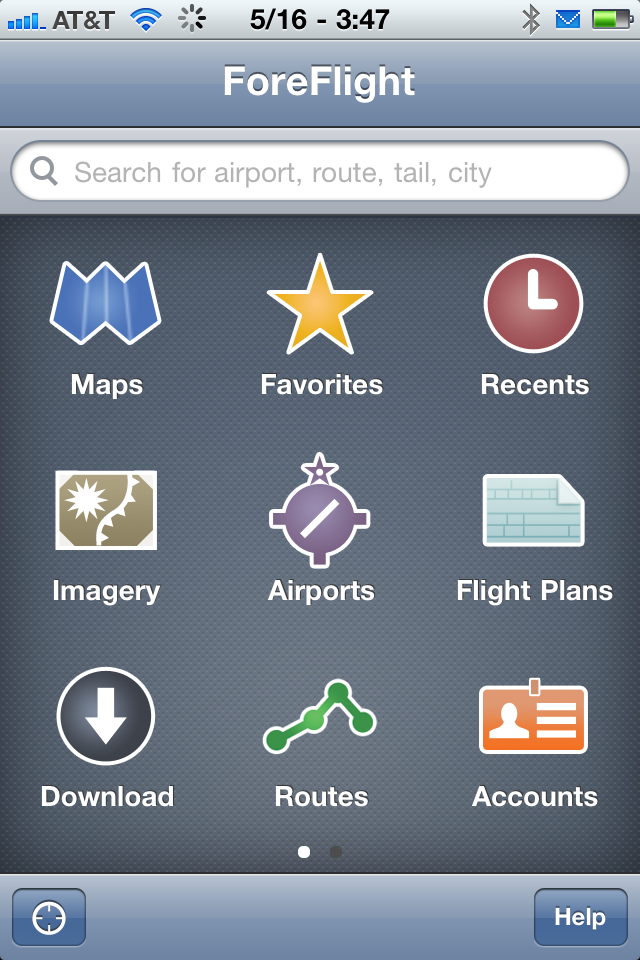
This high difficulty level extends to applications. I really like those iTunes store apps that have the plus sign next to the price. You pay once and you get something that works on both your iPhone and iPad. I hate paying twice for an app just because I want it on my iPhone and my iPad. Down the road I want to buy an app once and use it on whatever device is handy. This trend is already in full play. Just take a look at Steam. When you buy a program through Steam, you can download and install it on any machine you like. You log into your Steam account to gain access. The main problem here is that you have to download a large program for each device but that could be easily automated. Also, as more programs exist in the cloud, this will be less of an issue. Already some programs allow the user to start playing while sections of code not in use continue to download. The big problem is interface design. Imagine making Crysis work on everything from a phone to a TV set. That’s not easy. It is particularly difficult if the user wants to pick up a game in progress on one device, say a TV, where he left off on another such as his phone. To get an idea of the scope of the problem look at Foreflight. This is a great aviation app with an excellent user interface. However, their iPhone and iPad apps are two completely different animals. With Foreflight this isn’t too big of an issue since the apps are free and the database subscription allows use on an iPhone and an iPad at the same time. The photos below show how different the interface has to be because of screen size.

The iPad version of Foreflight allows selecting different pages from any current page. Look at the bottom of the picture below.

Sections like AIRPORTS and DOWNLOADS can be selected on the bottom. Now look at these screen captures from the iPhone app. The first shows the page equivalent to the iPad page shown above.

Here you select CLOSE which takes you to this page:

Now you can select the page you want.

I am not picking on Foreflight. Rather, I am highlighting what they have done as an example of adapting to the different screen sizes of the two devices while maintaining a lot of the same feel so that the learning curve is low. However, this is the easy part. Adapting to TV, car, laptop etc. will be a lot more difficult. If you are a pilot you might be wondering why anyone would want to use this program across so many devices. But, if transparent use and data is really achieved then imagine the following scenario. You are watching TV with some friends when the talk turns to playing golf on Hilton Head the next day. You bring up Foreflight on the TV and flight plan the trip to find out the flight time and take an initial look at weather. The next morning you quickly update and file the flight plan using your laptop. On the way to the airport you notice that the morning clouds haven’t burned off as expected so you decide to check the current airport weather. Your car interfaces into the Foreflight app on your phone and you are able to bring up the weather. In the air passengers follow the flight’s progress on the iPad using the same program. You have bought one application and used it across numerous devices. It feels easy and natural to do but it was only easy for you. For the developers it was a tough task. They had to sweat the user interface and how it would appear on different devices. The device manufacturers had to sweat the user interface of the OS to make sure this transparent usage would , well…, really be transparent.

If you have been following along with my comments on transparency you might think the only big prize is owning the phone market or the tablet market or both. There’s another prize that’s very big. To understand it you need to take a look at PayPal. When I am online I like it when PayPal is a payment option. I don’t have to pull out my credit card. I just have to remember my PayPal login and I can complete my desired purchase. What if every transaction in the US went through two or three companies? This would be like a super PayPal. It wouldn’t just be online transactions but local purchases such as groceries, gas, clothes and dining.

It’s time for some simple math fun. April 2011 retail sales in the US were approximately $390B. One percent of that is $3.9B. If a company could get a third of this it would be $1.3B. That’s per month or $3.9B per quarter. This is only for the US. How do you get 1% of every transaction? You make them flow through your device. With NFC, the phone is the gateway to your credit card. When watching TV,  think GoogleTV or Apple TV. What if all you needed was one account with Google or Apple and you could cover all of your bills using your phone or your TV? This makes iTunes look puny. Don’t kid yourself, both Google and Apple are eyeing this. I suspect Microsoft is too but they are a bit late.

Amazon, a company I haven’t mentioned till now, sees this  too. Their solution has been to be the central online shopping site. However, remember how the Germans went around the Maginot Line? Remember how I said Apple and Google were doing a similar end around on the Wintel alliance? We could have another end around play here. Imagine your phone being your main device for purchases i.e. replacing your credit card. Apple and Google could move in on Visa and Mastercard. Now that they have you funneling your purchases through them it’s a small step to begin guiding those purchases. Think Apple App Store on a huge scale. Think of the Google Market Place but selling more than apps. Both of these companies are sitting on large amounts of cash and looking for ways to turn that into even larger revenue and profits. What can Amazon do? They can take a clue from their Kindle line. I don’t own a Kindle. However, there are Kindle apps on my laptop, my desktop, my phone and my tablet. When I buy ebooks my first choice is through Amazon. I don’t buy through iBooks because iBooks isn’t as broadly cross platform as Kindle. It’s that old transparency of data thing again. By buying through Kindle (Amazon) I can read the book on all of my devices. I read them where I want, when I want, and on the device I want to use.  Amazon needs to be the one company that will allow both your Apple device and your Android device to use the same account. At all cost they need to make sure the various platforms are open enough to allow them to be the central clearinghouse for your purchases. The same can be said for Mastercard and Visa. Those two companies dominate the landscape right now. However, fundamental changes are afoot and that always spells opportunity for others. For the first time Visa and Mastercard are vulnerable.

When will this take place? No time in the near future as far as the general public will see. However, the initial steps are being taken now. At first you will just place your credit card information in your phone and use it instead of the physical card. This is only slightly different from having Amazon store your credit card information with your account. From there it’s a small step to add extras to the Apple and Google app stores. Finally, Apple or Google issue you the credit line and push Visa and Mastercard out. They will be able to do this by offering incentives from the savings generated by not shipping Mastercard or Visa 2%.

The old school model has been data everywhere and in its proper place. This directly relates to an old world paper model. Whether at home or at work each bit of data had a place. There was a file folder, nicely labeled, and placed in a drawer. That’s why, when you go to the doctor, you get to write the same information down several times on different sheets of paper. Each sheet has a purpose and a location it will get filed into.  As we have moved into the computer age we have carried this model with us. There was data on the desktop at work, data on the desktop at home, data on the file server and data on the laptop; oh, and data on the phone.

Lo and behold we found that, sometimes, data wasn’t where we wanted it. The first solution was manual transfer. I mean a really manual transfer. We would write data on a piece of paper and enter it back into another computer. Some people still do this when moving contacts from their desktop to their phone. This was replaced by sneaker-net where data was copied onto a storage medium and then read back in on another computer.  First there was the floppy disk and today there is the USB thumb drive. Next came the network. Finally data was easy to move. That is it was easy as long as you were on the net.

The problem was that home wasn’t connected to work nor was the hotel room connected to either one. This was attacked via remote logins and by sending email messages with files attached. However, attachment file size limits have made email problematic for the transfer of large files. FTP transfers had no such limitation but were cumbersome. Another attempt, still widely used today, is syncing. You sync your iPhone and iPad to your home computer so your songs and data travel with you. Less successful have been attempts to sync laptops to your desktop. The latest attempts at fixing this issue have been Dropbox, Yousendit, MobileMe, Windows Live Mesh and Live Sync. These help and are the first steps towards a cloud computing solution. Well, technically, Live Sync and Yousendit aren’t cloud based but I see them as very related. Live Sync can be viewed as a peer to peer extension of classic synchronization software but it feels closer to the cloud solutions when you use it. Actually, Dropbox, MobileMe, and Windows Live Mesh are really a merging of synchronization and cloud services. Synchronization has the advantage of maintaining a local copy so work can continue smoothly when the network is down or slow. The cloud aspect means that you can access your data even when you are away from a machine that is being synchronized. As an example, if a PICTURES folder is on the MobileMe iDisk, under the Dropbox folder, or is selected for Windows Live Mesh, the content in PICTURES can be accessed from a friend’s web browser with the proper login. Sharing content with others is also fairly straightforward. If you haven’t used these services be sure to try them. All but MobileMe are free at the basic level. MobileMe is about to get a major change so hold off on it till you see what the changes bring.

What we are seeing is the rising importance of transparency. In this case it is transparent data access. We want our pictures, music, movies and documents whenever we decide to view them, wherever we happen to be, and using whatever device is handy at the moment. The methods above aren’t totally transparent but they are a big improvement. When I got my iPhone, I left the Apple store with email, contacts and my calendar on my phone. Today, between my laptop, iPad and iPhone, a contact, calendar event or email added to one appears on all of the others.  If need be, I can access it all through a web browser on any machine with web access. Key files, including the document I am editing now, are synchronized across devices as well as being stored in the cloud. What we are seeing is the beginning of data transparency. There is a lot more to be done. In the end you won’t think about where your data is.

Recall what I said about major trends. Do the approaches above seem too similar? Is transparency just a minor trend that seems major? Was I wrong about trends and is this a case of one with a clear development path?  The answer is no to all of the above. There are other directions to data transparency.

Look at the RIM Playbook.Its Blackberry Bridge technology takes a different approach to transparency by tethering the Playbook to a Blackberry phone. One advantage of this is a single data connection, and hence a single expense, for both the phone and the tablet. By definition email is in sync since email is really through the phone at all times.  A big problem with this is that the tablet becomes tethered to the phone in such a strong way that it is no longer a separate device.

Need another direction? Look at the Motorola Atrix with its laptop dock. In this case the laptop is just an accessory screen and keyboard for the phone. Like the Playbook, the laptop is worthless without the phone. For some reason I don’t see that as a major problem. However, layz person that I am, I dislike the idea of having to plug and unplug the phone from the laptop accessory.

Yet another approach was outlined by HP CTO Phil McKinney here. He describes the Fossil Metal Watch which will allow you to carry your data with you.  All of your devices connect to the watch for data access. One problem, among several, is that a lot of people don’t wear a watch anymore. Furthermore, the watch screen is useless for data access. This means that you must, at the minimum, carry a phone in order to have access to a useful screen. Since you are carrying the phone anyway, why not just build the ability to be the data hub into the phone? In reality, that is what is going to happen.

So, what is the final answer? All of the above or at least parts of all of the above will survive the cut. The cloud will become very important and syncing will hang around. Rather than wearing a watch with our data stored on it, we will carry our phones. The phone will move from being an accessory to the laptop to being the main computing device with the laptop as an accessory. The current iPhone has 32GB of storage. It won’t be long until 1TB will be the standard. At that point there will be enough storage for the phone to be the primary data store. But, there will still be a need for offline storage. Also, there is the need to make sure critical data is backed up. That means syncing will stay around. This also means a cloud services component. Cloud services will allow access when the device isn’t with you and the sharing of files with friends. Mixing syncing with cloud services will mean gaining access to you apps and songs and OS updates without resorting to a PC. Expect to see iTunes move more completely to the cloud very soon i.e. in the next few months. What about the Atrix type device? My problem with the Atrix is that I am lazy and I think others are too. I don’t want to take out my phone and plug it in. Instead, I want it to link wirelessly to a keyboard-screen combination. Imagine going home and sitting at your computer. It lights up with what you were working on last. You get up and walk away. The screen goes blank. When you get to work and sit down the screen lights up again with what you were working on. A quick click of a mouse button switches the device to your work configuration and you are on your way. Your tablet will link to your phone to transparently gain access to your data. The same will be true for your TV. Imagine a video call on your phone. You sit down, tap an icon on your phone and the call is transferred to your TV so the entire family can see and talk to Grandma. Wherever we are, we will use the device that suits us at the moment. That device will have immediate access to all of our data. We will move from device to device easily even when we are in the middl of a task. The companies that best develop and integrate with this ecosystem win.

The computer is merging with the phone. The circuitry to do this is easy. Ouch! I can hear my colleagues in the semiconductor industry yelling at me already. What is being accomplished at the chip level is truly amazing. Processor speeds are hitting 1.5GHz and we have dual core processors with quad core just around the corner. Graphics are now 3D capable and 1080P playback is supported. Storage is 32GB or better. 512MB of RAM is common with 1GB on its way. Wow! That’s a nice laptop from a couple of years ago and a nice desktop from four or five years ago. Still, this is easy compared to the human factors issues.

The transition from desktop to laptop was easy with relatively simple human factors issues involved. The difficult part was the hardware. Software changed very little. Human factors involved things like making the screen thinner and the keyboard better. The smartphone brought basic issues to be resolved. Some, including whether to have a physical keyboard or not, are still being played out in the marketplace. As capability improved, Microsoft went down the “featuritis” path. Windows Mobile started to generate the first batch of application content for phones. But.. it took Apple to blow the doors wide open with the iPhone and its associated app store.

Why Apple won when Microsoft had such a huge head start involves many things and will be the subject of a future discussion. It is a fascinating topic. The simple answer is that Apple used the emerging power included in smartphone hardware to reinvent the user interface. In hindsight, everything prior to the iPhone either feels limited or clunky. With the iPhone we finally got a pone OS that understood it was on a phone rather than trying to be a mini laptop. The success of the iPhone user interface is illustrated by a friend of mine. He said that after getting an iPhone it was frustrating to use his Garmin GPS. He kept wanting to swipe the screen. That’s the sign of a good UI. It quickly becomes natural and you get frustrated when similar devices don’t operate the same way.

Today we have iOS, Android, WebOS, Windows Mobile 7 and several other contenders in the phone/tablet computer arena. We have phones with keyboards and phones without. There are big screens and small screens. With Android there is a mini battle of who can best customize the Android UI. The take-away is that this is a major trend. The path is not clear and is rapidly developing. The winning formula today may not be the winning formula tomorrow. The take-away is that this is a major trend.

According to IDC, there were more smartphones sold in 2010 than PCs. Think about that. Let it sink in. The phone is becoming the dominant computing platform. In the future the laptop will be secondary to the phone. It will augment the phone rather than the smartphone augmenting the laptop. As the phone takes on this new role it will have to evolve way beyond its present state. As this happens the phone will consume more and more devices. Convergence will expand well beyond computer and phone. In addition, a second trend will move to the forefront. That trend is transparency. This includes both transparency of use, i.e. the UI extending across many devices, and transparency of data.

I have mentioned convergence and, to a smaller extent, transparency. Both of these are much bigger in scope than what is commonly written about in the media. The trends are broader, stronger and deeper than is generally discussed and will have far ranging impacts on both software and hardware. Our lives are in the process of being transformed.   Hardware devices will come and go.  Some of the near term trends are but intermediate steps destined to be footnotes with our children telling their children “I remember when…”   In Hitchhiker’s Guide to the Galaxy we are told “The universe is big. Very, very big.” I am telling you that convergence and transparency are big. They are very, very big. How big? Big enough to transform our lives rather than being just a small shift. Big enough to cause hardware and software to be created and then to fade away. Big enough to have major companies fight for supremacy or, in some cases, survival. There are companies today wasting precious engineering resources designing yesterday’s products because they are looking so near term that they miss where things are really headed.

Enough of the FAX machine. I want to return to the idea of segregation. Segregation, and consequently convergence, is a lot broader in scope than FAX machines and copiers. There is also data segregation. We have data on our desktop at home and data on our computer at work and data on our laptops and data on our phones. Remember the little locker folder from Microsoft that was supposed to aid with synchronizing your data? No? OK, I don’t remember much about it either. Today we synchronize through Google or Dropbox or MobileMe. This allows us to share some of our data across various devices. But segregation and hence upcoming convergence is broader than that. Whether it is a church directory, our checkbook, an old family recipe, or a list of To Do items we have data everywhere and much of it is physically compartmentalized. We are comfortable with this. Mankind has centuries of adaptation to this model. Just think of the traditional file cabinet. We place things in physical locations and then later, when we need them, we try to remember where they reside. I suspect most people reading this know that this is changing but do they understand how truly pervasive this trend is?

OK, now it’s time for a brief side trip so I can hint at what will be a major upcoming topic in future posts. I want to go back to the FAX machine. When the FAX started getting merged with the printer one thing that made the move successful was the low learning curve. The buttons on the multifunction printer were dedicated FAX buttons. With LCD displays this is now a little different but the concept is the same. Select FAX and the “buttons” are all there. This transparency of use, where there is little training and it is seemingly obvious how to operate a device is a major underlying trend today. Look around and think of all of the different interface systems you learn. There is the TV remote, the game system, the smartphone, and the computer. That’s just a start. Let’s move to the car where many have a complex interface be it IDRIVE or SYNC. Transparency of use, or the lack thereof, is broader than most understand. While related to the idea of ease of use, transparency is much bigger in scope and impact. Together with convergence these two trends are going to drive a major battle pitting many companies against each other and transforming how we use technology.