
Archive for June, 2011

At WWDC Apple announced an improved AirPlay in iOS5. I have broken this out for a separate post because it has gotten little attention from the mainstream press and has huge near and long term implications. The key new feature to focus on is AirPlay mirroring. In the near term this is all about corporate penetration. Mirroring works on the iPad 2 and allows you to display the screen on a separate device; for example a TV with Apple TV attached. This is another step towards using the iPad as a presentation device. All that is needed is a wireless receiver that can be hooked to the projectors now standard in corporate meeting rooms. That would allow cordless mobility using the iPad as a small, easy to hold, presentation device. There is a lot of near term potential here. This is about way more than a few extra iPad sales. Apple has always been viewed as a consumer company. The iPad is changing that and the result is big. RIM had the iPhone locked out of the corporate market. Recent security improvements on the iPhone together with the iPad being adopted in the corporate market has changed that. The result is that RINM is losing its hold on the corporate world. Driving the iPad deeper into the corporate world will extend this and prevent the Playbook from getting traction. The iPad has the potential to be the de facto corporate presentation device. Apple just needs to listen to me and make the wireless battery powered AirPlay display adapter. Throw in transparent collaborative syncing of files and corporate presentations just got a lot easier and slicker.

In the long term AirPlay mirroring takes on even greater importance in an entirely different way. First, you have to move AirPlay mirroring to the phone. Then add in a data link over Bluetooth. What you now have is the ability to merge the phone completely into the automobile. This will take a lot of work to be done in a way that is clean and aids rather than distracts the driver. As a simple example, however, imagine playing movies stored on your phone on a display in the car. Another example would be using the GPS and navigation software in your phone to display a map and directions on the display in your car along with voice guidance through the car’s audio system. Commands would be given through controls on the steering wheel and voice commands. This is a small but important step towards making the phone the dominant computing platform by a wide margin.

At WWDC, Apple announced iMessage. This is a direct attack on BBM. BBM has been a cornerstone RIM product. BBM has been about what makes a Blackberry different. Ouch! At every turn Blackberry seems to lose relevancy and it’s ecosystem gets passed. The Playbook is getting a lot of ad time right now but the Samsung Galaxy Tab 10.1 is just about to hit stores and it will be a much better tablet for those who eschew the Apple ecosystem. I hate to keep repeating myself but I see little from RIM to give me hope. All I see is a painful decay. In and of itself iMessage is just another small evolutionary step towards convergence and transparency similar to the nice moves Microsoft made in Mango. For RIM it is another big blow.

I didn’t publish anything Monday or Tuesday. I was busy digesting what was coming out of WWDC and E3. I won’t regurgitate the standard stuff covered better by sites such as Engadget. Rather I want to comment on what people missed or only put down as a footnote. However, I do need to go through a few big items. First, WWDC is notable for no new hardware and few surprises. Little made me go WOW! The cloud is taking on more importance. However, a lot of this has already been done by Microsoft and Google. What Apple brings, get ready for it, is better transparency of use. If you are willing to buy into the Apple ecosystem then you get data transparency in return. The same goes for Microsoft and Google but the Apple approach is more automatic and, here is that word I overuse, transparent. This is an ecosystem war. Who gets left out? Well, I’n not buying any stock in RIM.

Everyone is talking about what the cloud will do. Here is what it won’t do. Right now no one has it syncing apps or present device status. That means when you move from one device to another you don’t just pick up where you left off. Your data will be there but you will have to open an appropriate application and load the data. If you don’t have an appropriate application installed, for example Excel, then well… it won’t be installed. So, all of the new stuff  coming out is a step in the right direction but just a step.

I liked Apple’s Match announcement but it just highlights the bandwidth limitations that make a pure cloud existence less than thrilling. The bandwidth issue is one of many reasons I am less than thrilled with Google’s Chromebook concept. Also, you will have to be careful with iCloud to make sure you really have your photos backed up since they only remain in the cloud for 30 days. In the end the cloud is great for syncing and sharing but i don’t want it to be my only data storage location.

As far as E3 is concerned there was the usual plethora of game announcements. On the hardware front Nintendo showed an early version of the Wii U complete with graphics generated on Xbox 360 and PS3. Yes, you read that correctly. Some of the example graphics were actually generated on competitor’s platforms. What’s notable about the Wii U isn’t the fact that it has a faster processor or 1080p graphics. The big deal is the new touch screen controller. It lets you play without using the TV set or if you do use the TV, have a second display. Wait, isn’t this just like what I was suggesting for Apple? Oh yeah, the Nintendo controller includes accelerometers and gyros just like an iPhone. Nintendo is on the right tract. However, Apple, Google and Microsoft are all coming from stronger positions if they will just see it and actually attack this space.

I have discussed the need for wireless charging on several occasions and mentioned a new ultrasonic technique here. One issue with the ultrasonic method is inefficient penetration of materials. For example, a simple mobile phone case has the potential to prevent charging. My version of transparency demands that the user have to do nothing to connect. It needs to occur well ummm…. transparently. I mentioned the problem with inductive charging being range and the need for a one meter range. Well, I was mistaken about the limitations of inductive charging. In fact, mistaken is an understatement. Back in 2007, Karalis, Joannopoulos, and Soljac published “Efficient wireless non-radiative mid-range energy transfer” in Annals of Physics. Apple was more observant than I am and picked up on this. The result is their patent “Wireless Power Utilization in a Local Computing Environment.” It describes wireless charging over about a one meter range. The near term impacts of this are small but the long range impact will almost certainly be huge. This isn’t a one off patent from Apple. They have already been looking at more typical very short range inductive charging solutions. For example patent 7352567, “Methods and apparatuses for docking a portable electronic device that has a planar like configuration and that operates in multiple orientations”, describes a wireless charging and data connection base for the iPad. It’s interesting for also including a wireless data connection in the base.

In terms of long range potential, imagine having your phone charged while you drive your car or while you sit at your desk at work or when you sit in your recliner at home watching TV. Freeing the phone from its battery limitations opens it up to become your primary computing device where you are able to rely on it always being there. This is huge. Google, Apple and Microsoft are all working on syncing through the cloud. However, that only goes so far. They are syncing data and not applications. Also, it will be a long time before truly high speed wireless data is everywhere.

Pioneer announced the AppRadio a few weeks back . You can read about it here. I got excited at first. I thought they had really integrated the iPhone into the radio. Instead it runs its own apps. I want it to display my iPhone on a screen in my car so that I run the apps on my iPhone. I don’t need yet another device to get apps for. I want to run the ones I already have on my iPhone.  I was kind to Mulally in my last post. That’s because I feel he is pushing Ford in the right direction. Still, will someone please “get it” that the phone is primary and the car should include an interface to the phone rather than duplicating the smartphone’s functionality?

Lately I’ve watch a number of interviews with Ford CEO Alan Mulally. I find a lot to like in this guy. He puts forth a good image for Ford. Moreover there seems to be substance to back up the talk. When you look at Ford you see a company on the upswing. Quality has improved to where it competes with the best out there. Furthermore I sense a spirit in the company which wants to lead rather than follow.  I don’t always agree with what’s being done but I admire the attempt. A good example is the use of Microsoft’s Sync product. It’s flawed. I have concerns because it is from Microsoft. Then again I would have concerns if it was from Apple.  It does NOT do what I think it should. Mulally seems to understand this. Here is a good interview that speaks to convergence and transparency.

Pay particular attention to the 7:40 and 10:10 time points. Mulally mentions making the digital life in the home merge with the digital life in the car. I like this guy. He accepts criticism of Sync but stands by it as the right direction even if presently flawed. I like a guy willing to believe in a direction and work to perfect it even if the initial attempt isn’t what it should be.

I mentioned that Mango showed that Microsoft could come on strong once they recognized they were behind. I saw a few unexpected features in Mango and it gave me hope that Microsoft was still in the game if very far behind. However, with the release of more information about Windows 8, I am truly surprised. Microsoft really gets it. They see the need for a unified OS across platforms and for a transparent user experience. Furthermore, Microsoft is using its strength on the desktop to leverage itself into the tablet and phone space. This isn’t my pick for the easiest path in general but it is the easiest and best way for Microsoft. More than other releases, Windows 8 will be about an aggressive business strategy. I love it when business, the consumer, and engineering mesh at such an intimate level.

Windows 8 is important on several levels. First, let’s start with the fact that it will not only run on X86 CPU’s but on ARM. Wow! Let that sink in. This means Windows on a CPU that isn’t compatible with the Intel X86 architecture. There will be no emulation layer so current X86 apps won’t run on ARM based hardware. However, this is important in and of itself. Microsoft will be encouraging developers writing lighter apps to write in Java and HTML5 so the apps will be independent of the CPU used. Add this to Apple toying with the idea of an ARM based MacBook Air and you know why Intel is nervous.

The next surprise is the breadth of Windows 8. It is really a tablet  OS where the mouse and keyboard can substitute for touch. You read that correctly. The OS is, in many ways, a tablet OS first and a desktop OS second. This doesn’t mean a compromised desktop OS. What it does mean is an OS with touch infused throughout.  The same OS will run on tablets, laptops and desktops.

They say a picture is worth a thousand words and the next surprise is best illustrated with a couple of pictures. Here is one of Windows 8 on a PC:

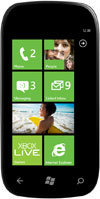
Next I have a picture of the home screen from a phone running Windows Phone.

Do you see what I am excited about? Just like Apple, Microsoft is making the desktop OS look and feel like the phone OS. Do you believe me now when I talk about the push for transparency of the computing experience? Now go back to the comment above about Microsoft pushing for apps written in HTML5 and Java. Those will be easy to port to Windows Phone and vice versa. Microsoft may be late but they are coming on strong.

What does this mean on the business side? Obviously the push onto ARM is a threat to Intel and AMD. In terms of the other hardware and software players here is how I see it. RIM is in an increasingly bad position. They have zero desktop presence and Microsoft is stronger in the corporate world than RIM. Windows 8 might seem independent of RIM’s Blackberry world but, in actuality, it has the potential to do great damage. HP may take a hit too. They are betting a lot on WebOS. I don’t see what the value add is for WebOS. Call this one more wait and see but be skeptical. HP could quickly shift to being Windows 8 centric if need be. Heck, they are Windows centric today.  Apple probably fairs OK in the near term. Longer term they might lose some of their momentum. However, I see Apple as the best positioned against Windows 8 if they can continue to move towards merging iOS and OSX. I’m still very strong on Apple. Next up for Apple is iOS 5 and iCloud which will be announced next week. Windows 8 could be problematic for Google. I have trouble believing in Chrome as a desktop OS. Google will still be ahead in the TV space but compared to Microsoft and Apple they lack the desktop. Android is the largest selling smartphone OS and we are about to be inundated with Android tablets including some excellent ones such as the Samsung 10.1. I still see Microsoft being behind Google but it is a lot more interesting than it was a day ago. Apple just made iWork available on the iPhone in addition to the iPad and OSX devices. Microsoft will have Office running across all devices. Will people buy into Google’s idea that web based solutions are the best answer for their productivity apps? People may but only if Microsoft screws things up. Then again, Microsoft mucked things up in the past with poorly conceived products like Works.

I mentioned earlier the issue with battery technology and my dream of the phone as the primary computer. One solution is to make chairs with built in chargers. Imagine sitting at your desk and having you phone automatically charged. Your mouse, keyboard and display are linked wirelessly. You get up and go into a meeting room. When you sit down, wireless charging circuitry in the chair keeps your phone from running down. A wireless link causes the screen built into the table to go active and the keyboard and mouse in front of you go active – all linked to your phone. Effective wireless charging technology would mean that today’s battery technology would be adequate. The problem is with the charging technology. It doesn’t really exist. There are inductive chargers but to be efficient they require that both ends, the phone and the charger, be in close physical proximity with separations on the order of centimeters. For what I want, charging needs to ideally be effective over distances of a meter but at least a third of that. A new approach is being developed by uBeam. This is a very small company. Actually the company is just two college students. That said, they are trying a novel approach using beamed ultrasonic waves. If it works as advertised then another part of the puzzle needed for true convergence just might be falling into place. I am trying to find out more about this to see if it is something to get excited about. Stay tuned.